Tree Removal and Tree Care in Johns Creek, GA
The loblolly pines behind these subdivisions run 80 to 100 feet on a shallow root plate, and the water oaks hollow out quietly. Since July 2025 most homes here can have a tree taken down with no permit at all. Call and we will come look at it.
How much does tree removal cost in Johns Creek?
Most removals here land between $1,100 and $2,100. That is a typical 60-foot pine with clear access, or about $18 to $35 per foot of height. Height sets the base. A pine leaning over the roof, a tight side yard, or a crane lift moves it up. We put the price in writing first.
Tree work for Johns Creek yards
Five things, done properly. Most calls start with a leaning pine or an oak that dropped a limb without warning.
Tree Removal
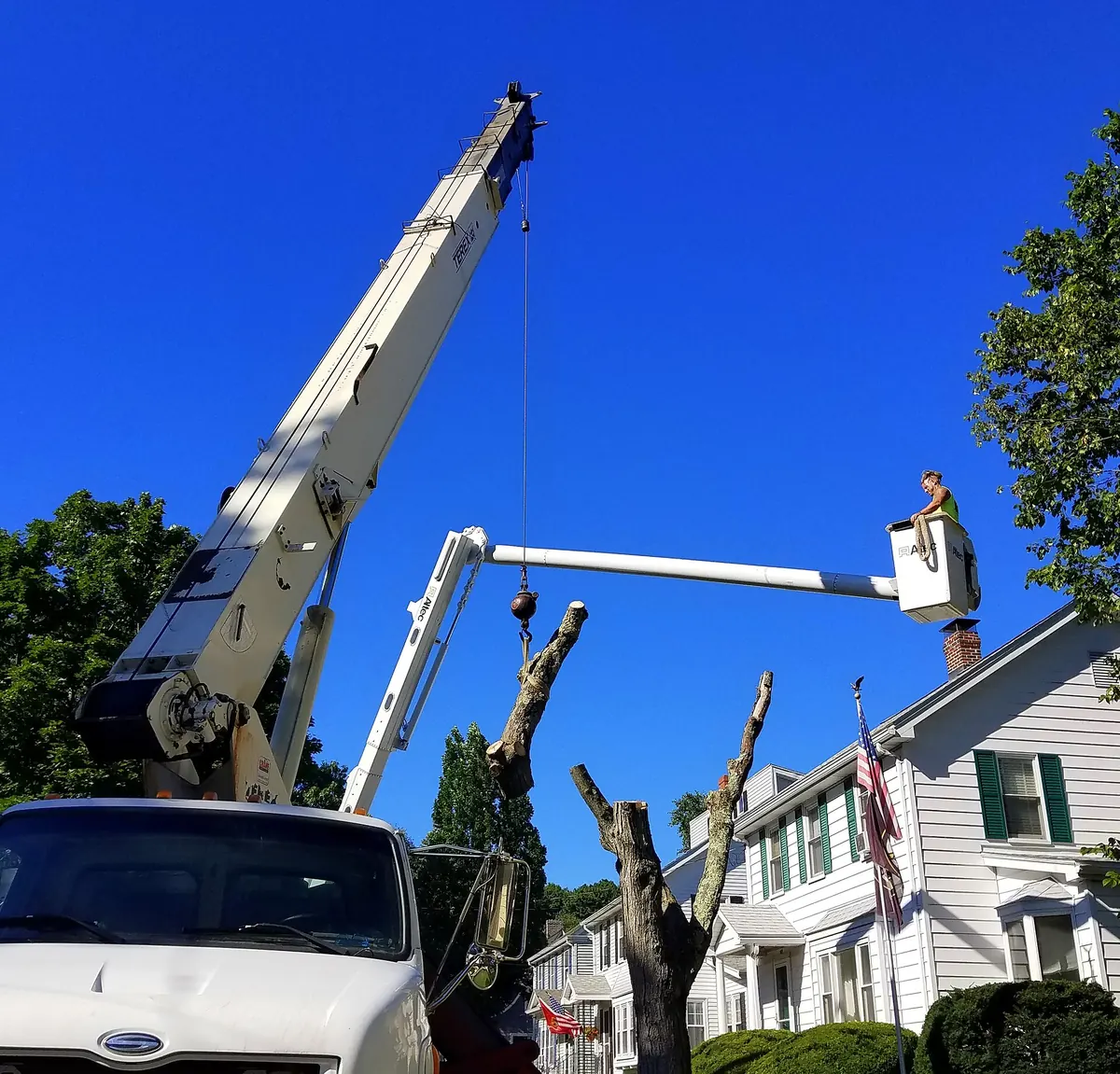
Whole-tree takedowns, from a leaning pine over the driveway to a hollow oak beside the house. Sectioned down with ropes when the drop zone is tight.
Learn more →Tree Trimming & Pruning
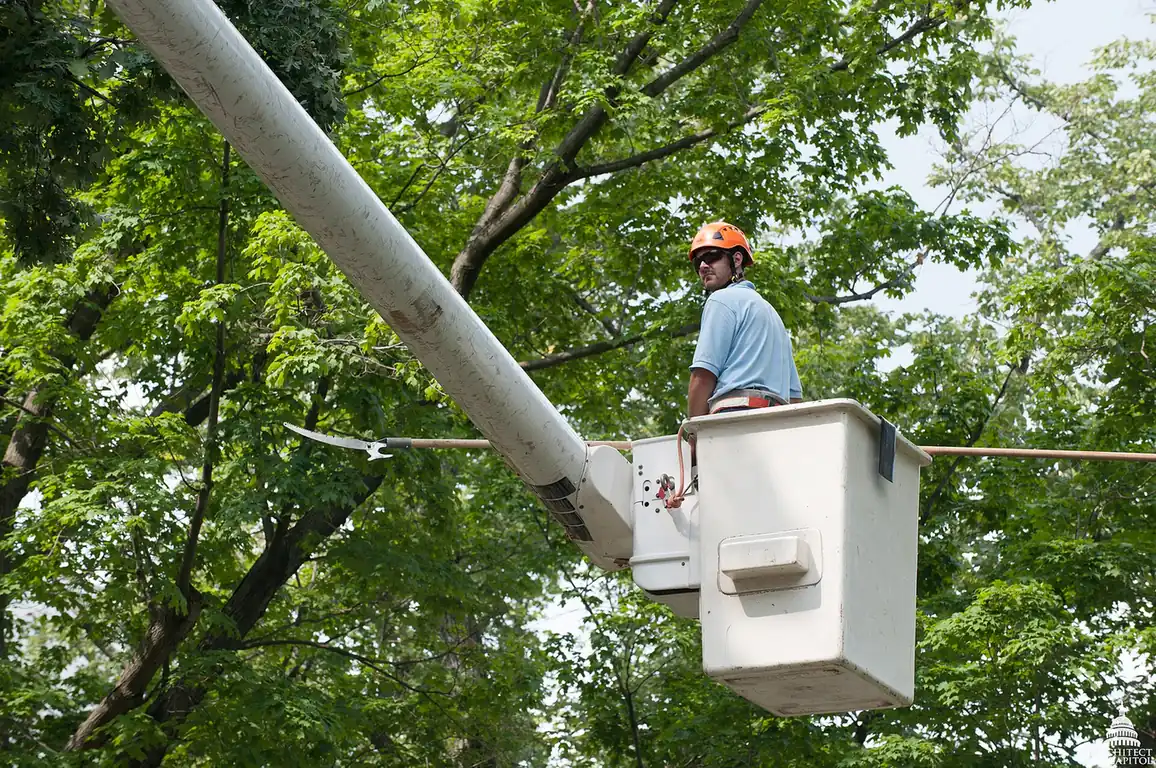
Deadwood out, weight off the long limbs, clearance from the roof and the service drop. Cuts made at the collar so the wound can actually close.
Learn more →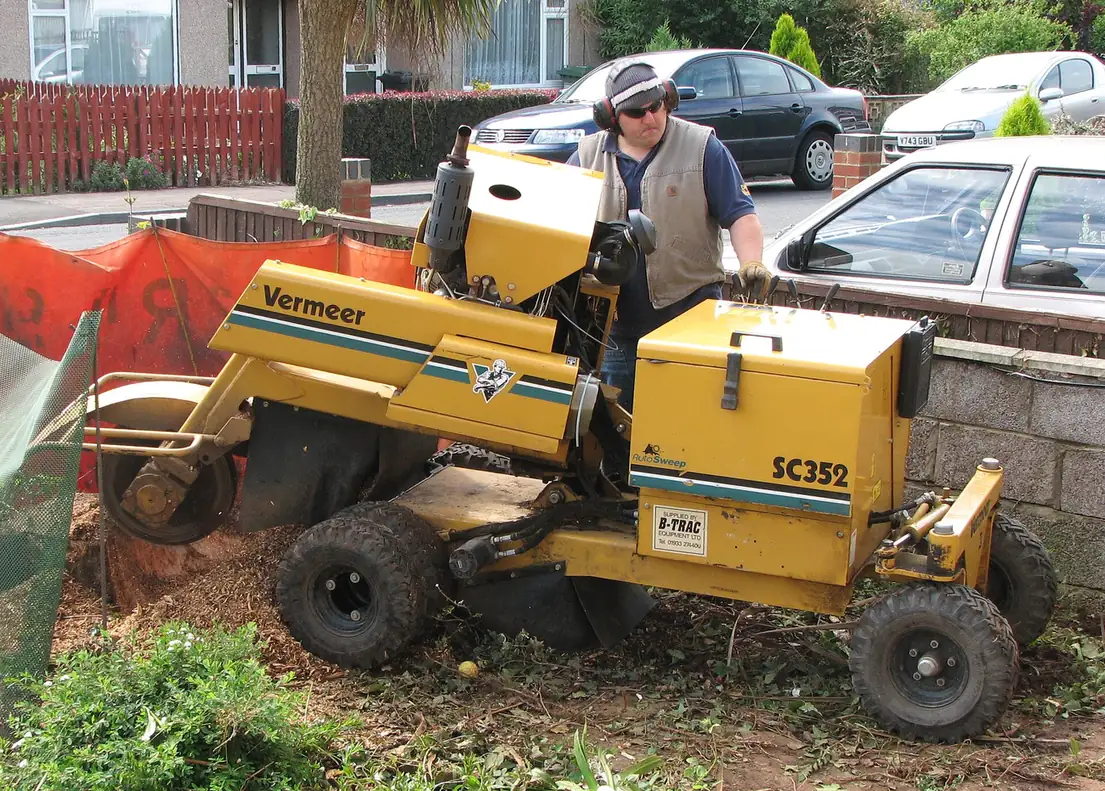
Stump Grinding & Removal
Ground out below grade so you can sod or replant over it. Grindings raked back in or hauled off, your call, and the surface flags marked first.
Learn more →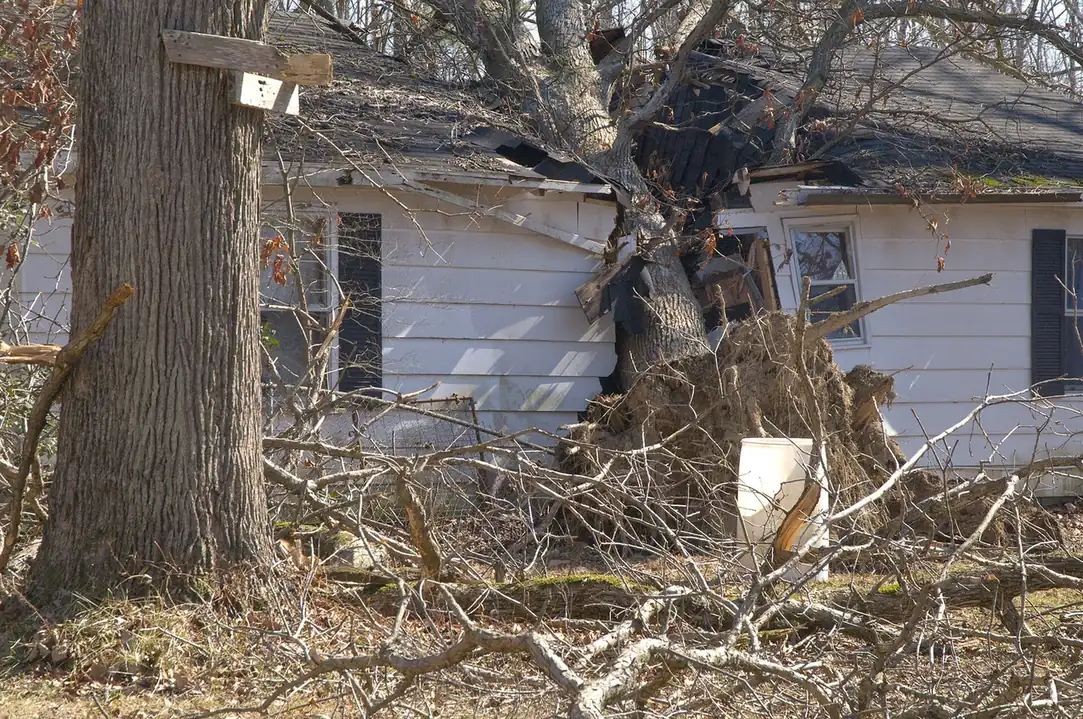
Emergency & Storm Damage
Trees on roofs, blocked drives, hangers left in the canopy after a thunderstorm. We stabilise first, then cut in the order that keeps load off.
Learn more →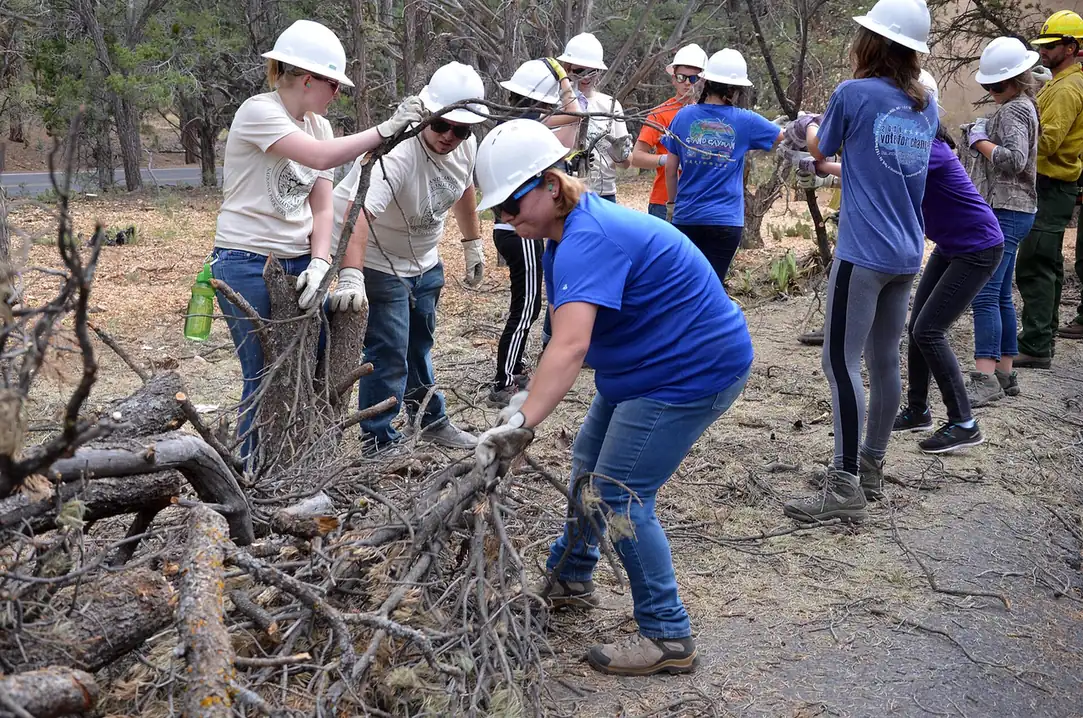
Land & Lot Clearing
Back-lot thinning, fence-line clearing and small-lot work, kept clear of the stream buffers and river corridor that cover a real slice of this city.
Learn more →When does a tree actually have to come down?
Not every ugly tree is dangerous, and not every green one is safe. These are the signs worth a same-week look.
A pine that has started to lean
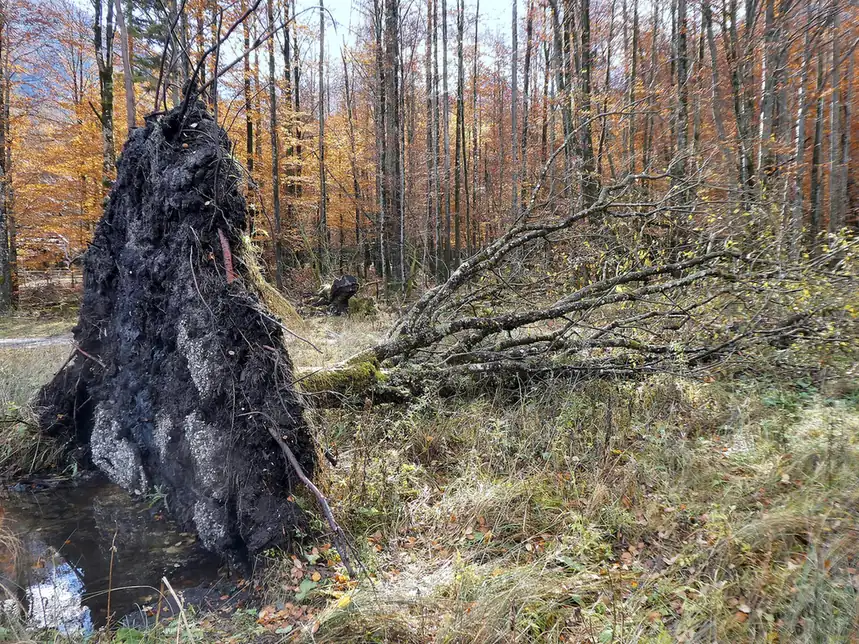
A lean that appeared recently matters far more than one the tree grew into. Look for cracked or heaved soil on the side opposite the lean. That is the root plate lifting.
A water oak that looks fine up top
Water oaks hollow out from the inside somewhere around 50 to 70 years while the canopy still looks full. A healthy crown tells you very little about the trunk holding it up.
Mushrooms or conks at the base
Shelf fungus on the lower trunk or root flare means decay fungi are already eating the structural wood. By the time it fruits on the outside, the inside has been working on it for years.
Bark coming off in sheets
Large plates of bark shedding from a pine, with the wood underneath dry and grooved, usually means beetles got there first. Those trees go brittle fast and get harder to rig safely.
A crack running down the trunk
A vertical seam, or a split where two big stems meet, is the failure line. Included bark in a tight V-shaped union is the classic one on Bradford pears and older maples.
Deadwood hanging over the roof
Dead limbs do not need a storm. They need one gust on the wrong afternoon. If the dead wood sits above the driveway, the roof or a bedroom, it moves up the list.
What you get when you call us out in Johns Creek
Because we tell you when a tree does not need to come down. Plenty of the calls we take here turn into a pruning job, or into nothing at all, and saying so is cheaper for us than arguing about it later. We also know which side of the permit line your tree sits on before we quote, which matters in a city bounded by the Chattahoochee and threaded with stream buffers. The price we hand you is written down, it includes hauling the debris away, and it does not move once the saw starts. Nobody knocks on your door after a storm either.
The permit question answered first
We check the zone against the current city rules before quoting, not after.
Debris haul-off in the number
Burning is illegal here from May through September, so hauling is priced in, never bolted on.
Rigging instead of dropping
Tight lots and close neighbours mean sectioning limbs down on ropes, not felling and hoping.
A written price that holds
Measured on site, put in writing, and unchanged unless you change the scope.
What actually changed for Johns Creek tree permits
On 28 July 2025 the city added Section 7 to its Tree Preservation Ordinance, and for most homeowners the permit stopped being the hard part.
- What the rule says nowAny tree may be removed from a developed, residentially zoned, single-family detached lot with no removal permit, provided it is not in a protected zone. Size no longer matters on its own.
- What still needs permissionA tree standing in a zoning buffer, a stream buffer, the Chattahoochee River Corridor, a required landscape strip or a tree save area. And any specimen tree.
- The specimen sizes moved too32 inches d.b.h. for large hardwoods and softwoods, 12 inches for small native flowering trees. Pines of any size stopped counting as specimen trees entirely.
- Why that matters hereLoblolly pine is the tree most likely to come down on a house in this part of Fulton County. The amendment took the slowest approval step off the most common dangerous tree in town.
- The catch worth knowingPlenty of sites still publish the old 27, 24 and 10 inch thresholds from the city flow chart that predates the amendment. Those numbers are dead. Check the current guidelines, not a cached PDF.
Why the trees here fail the way Johns Creek trees fail
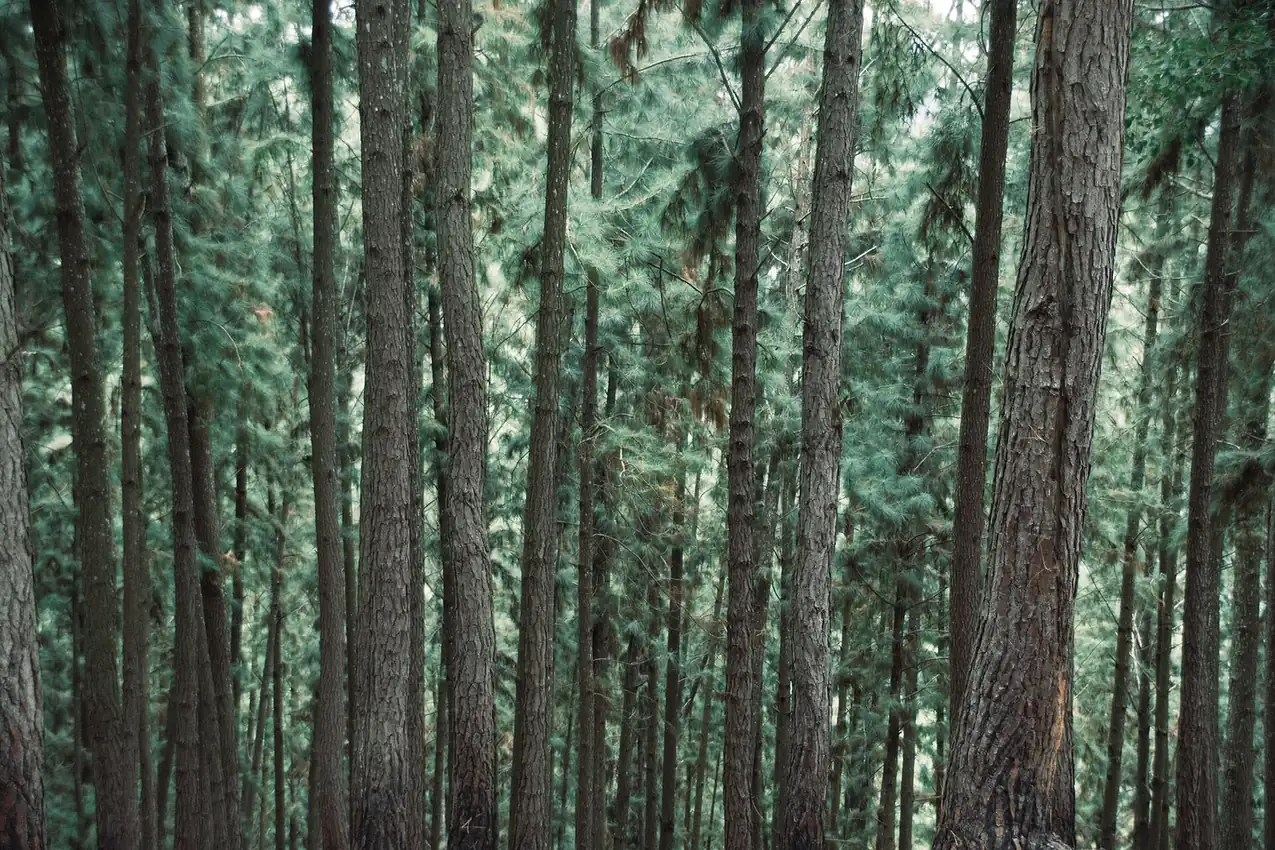
Because this is Piedmont oak-pine-hickory forest that got subdivided. The loblolly pines left standing when these neighbourhoods went in during the 1980s and 1990s are now 30 to 45 years old and tall enough to reach a roof. Their roots spread wide and shallow in red clay rather than anchoring deep. Add 54 inches of rain a year and a summer thunderstorm, and a saturated root plate simply lifts. The water oaks are the quieter half of the problem, hollowing out from the inside while the canopy still looks full. We remove, trim, grind stumps, clear lots and handle storm work across Johns Creek.
- ✓ Loblolly and water oak work
- ✓ Tight-lot rigging
- ✓ Stream buffer aware
- ✓ Full debris removal
- ✓ Written estimates
- ✓ Locally owned and run
Tree crews across north Fulton and the Gwinnett line
We work Johns Creek first and the ring around it after: Alpharetta and Roswell to the west, Suwanee and Duluth across the Gwinnett line, Cumming up into Forsyth. Same written price whichever side of the county line you are on. No travel surcharge inside the ring.
Straight answers about tree work in Johns Creek
Got a tree you are not sure about? Let us look at it.
Send a photo or just describe it. If it can wait, we will tell you it can wait.